Click on an item to find out about it…
Click on the accompanying images for a more detailed look.
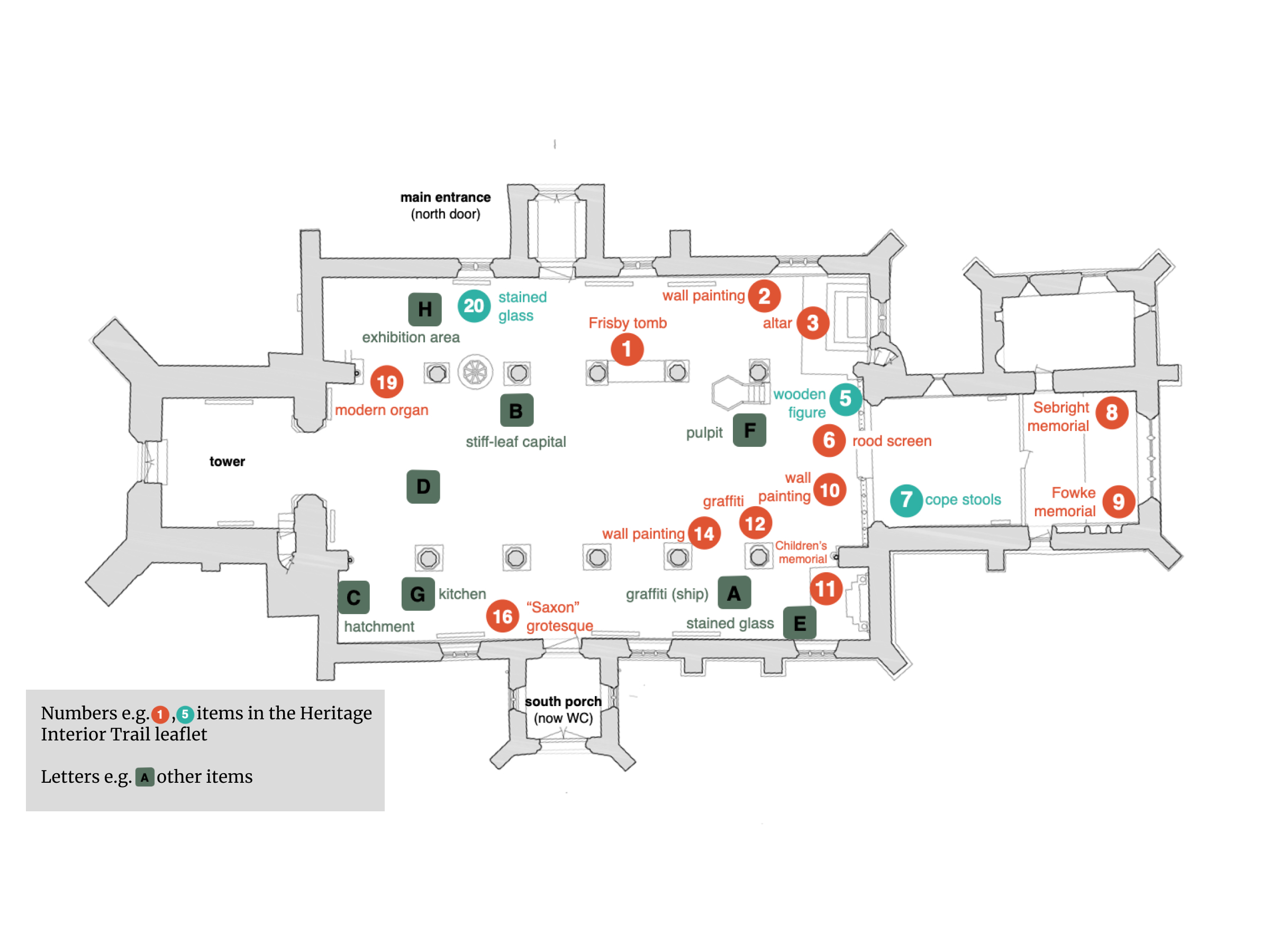
Click on the accompanying images for a more detailed look.
The interactive floor plan is for the church interior. The associated building history timeline is about the church fabric and how it evolved over many centuries.
Further sources of information are outlined in the “Find out More” section.
To return to this panel click on the 'Interactive Plan' title at the bottom.
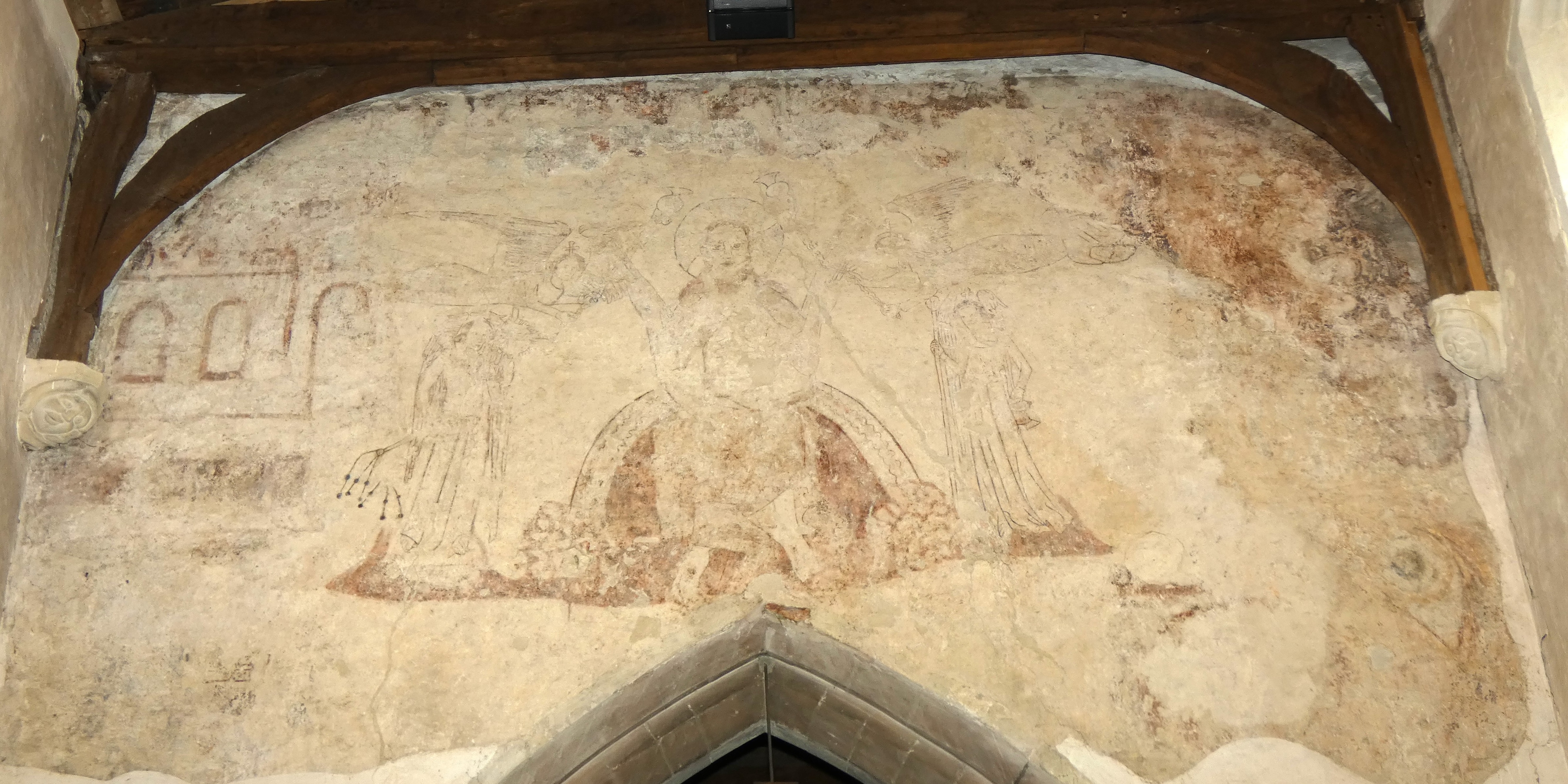
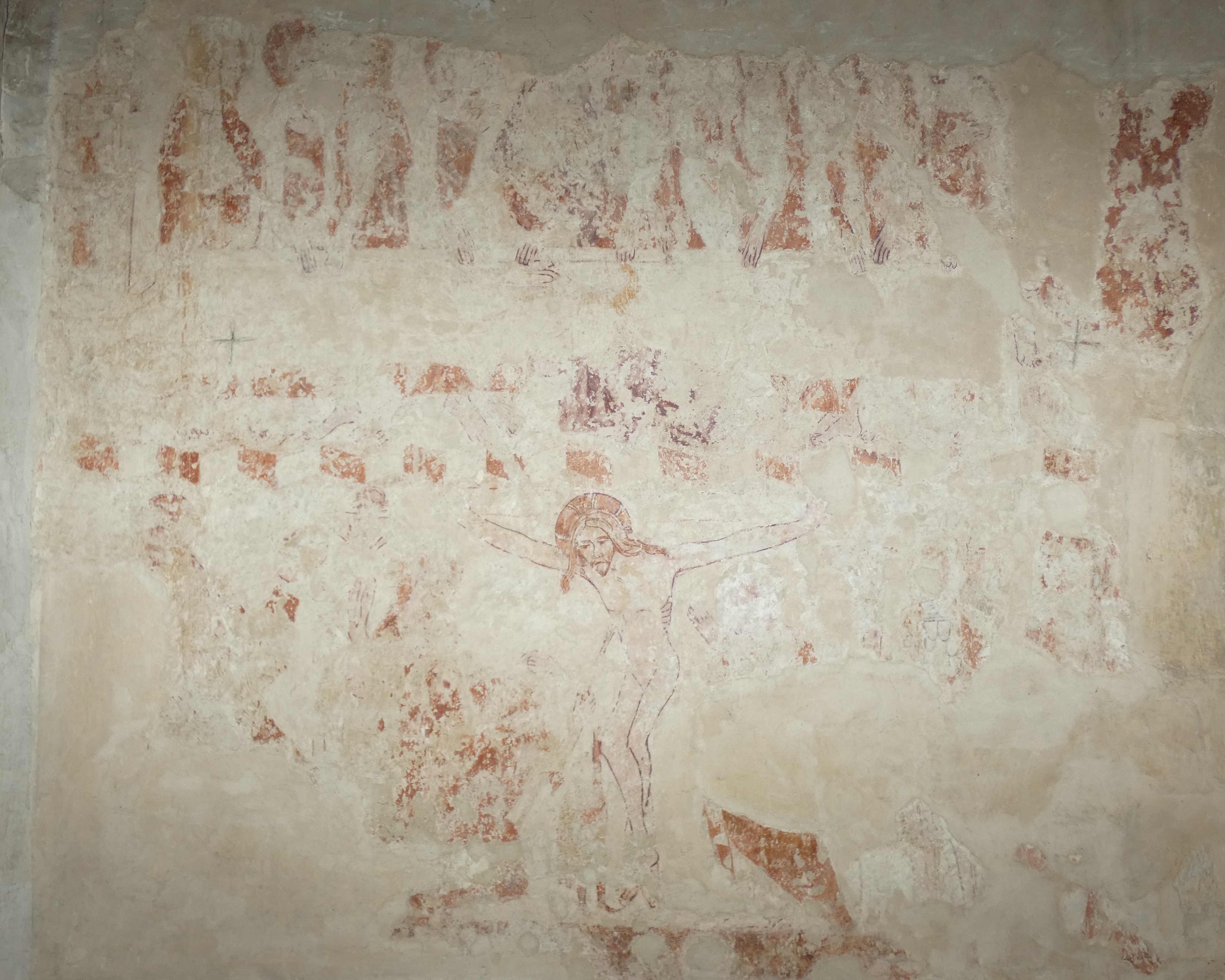
There are several series of wall paintings, dating from the late 13th century, acknowledged as “the most important in a parish church in Hertfordshire”. They were covered in whitewash during the Reformation and uncovered between 1930 and 1990.
Illustrated are a 14th century “Passion Cycle” 2 and a 14th century “Christ in Majesty” combined with a 15th century “Doom” 10.
See also “Three Living and Three Dead” 14.
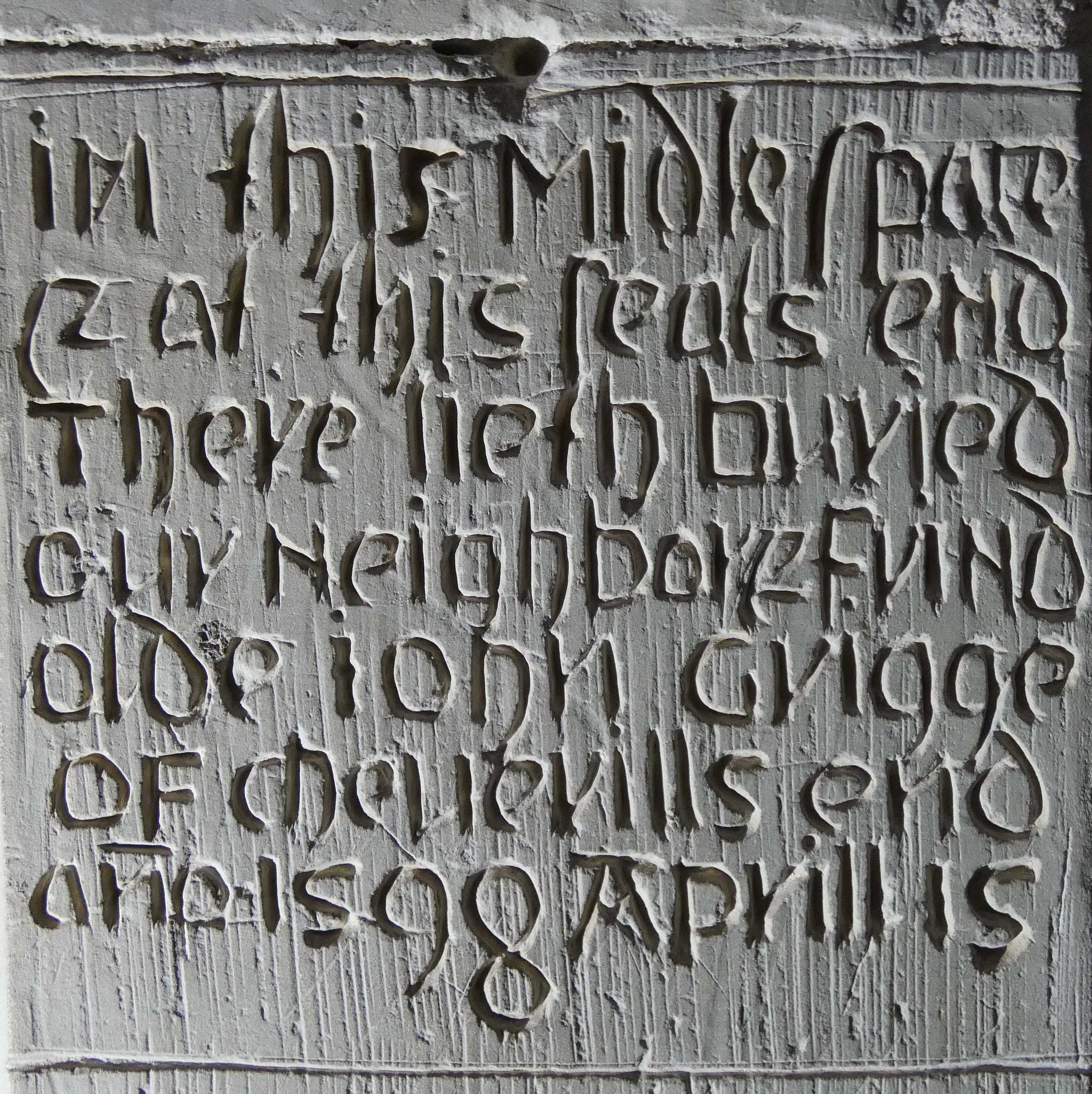
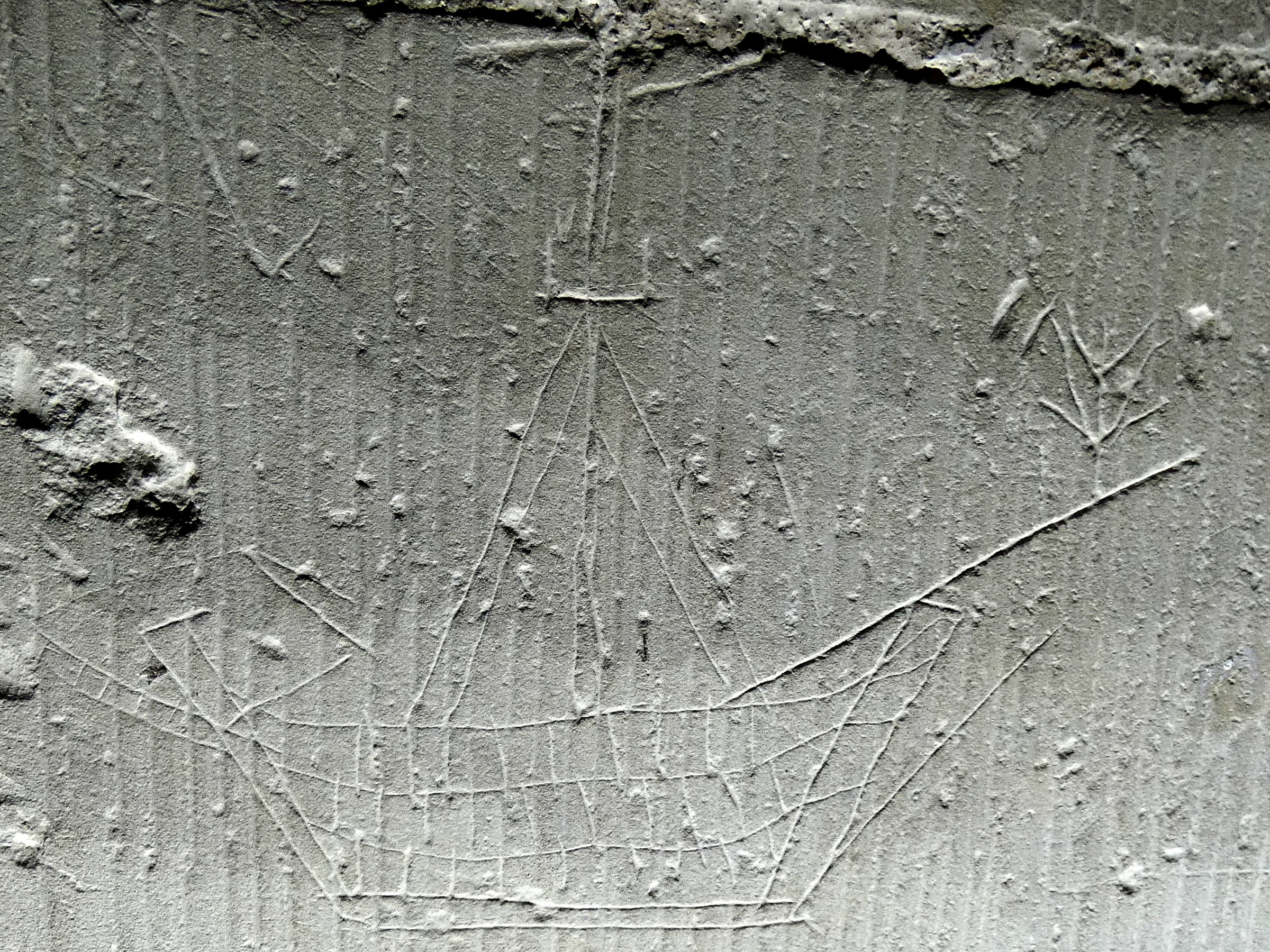
The mediaeval graffiti in St Leonard’s has been rated by expert Matt Champion as “one of the top ten churches in the country”. There is a wide range of different types.
Illustrated is an Elizabethan memorial inscription 12 and a “cog” A, a 14th century ship.
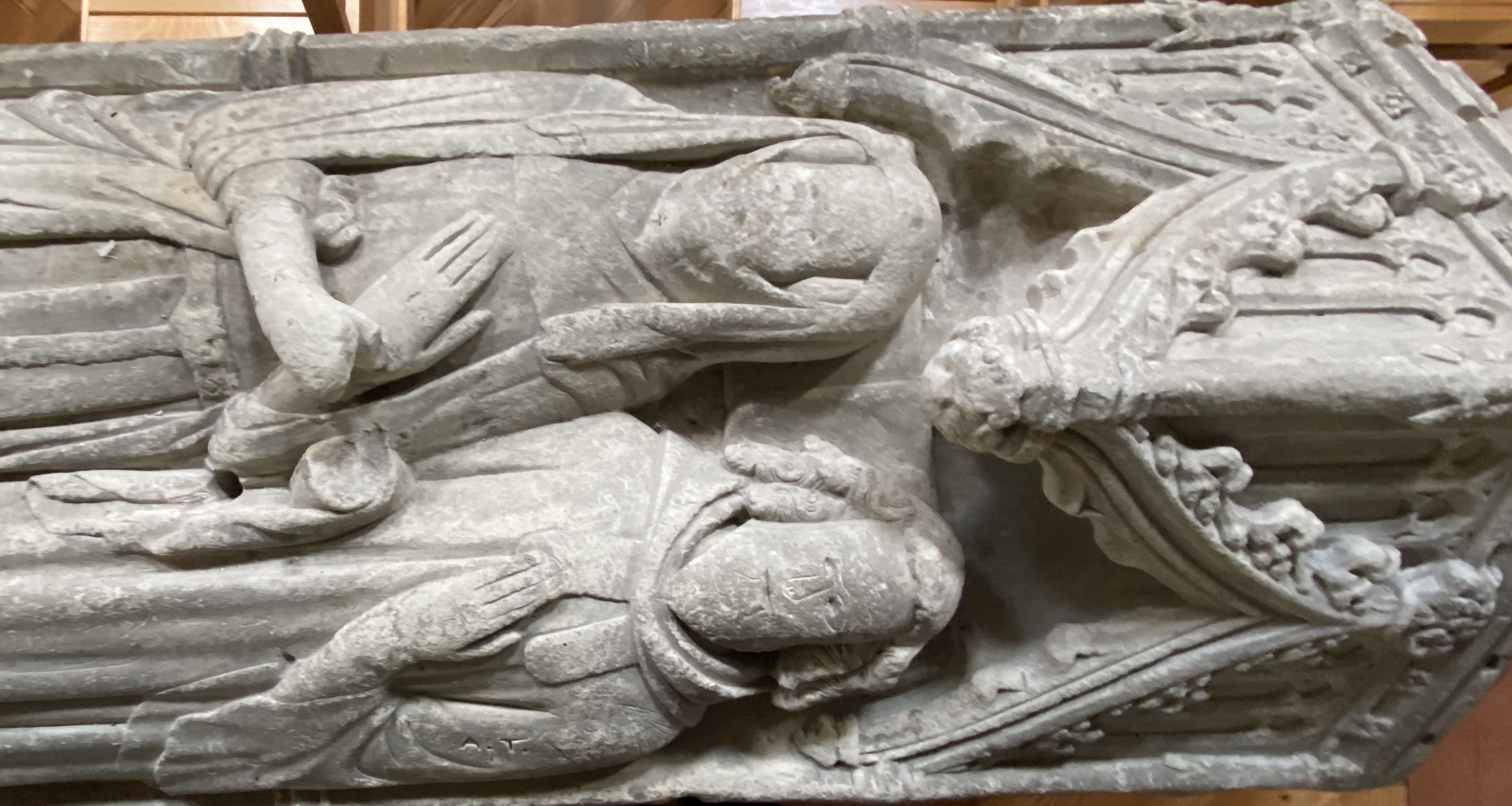
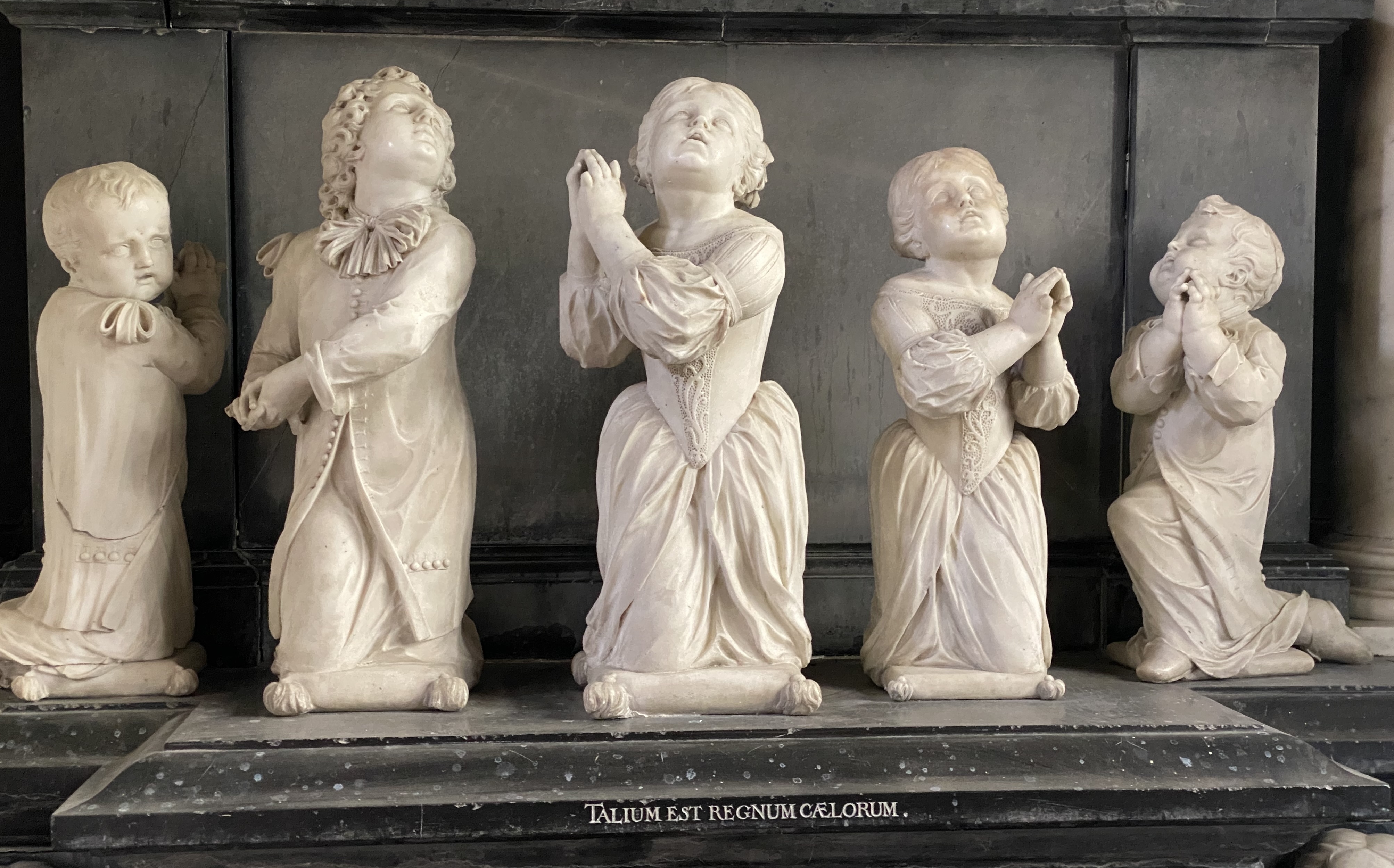
There are many interesting memorials inside the church.
Illustrated are the early 15th century “Frisby Monument” 1 and the 1693 “Saunders Children’s Memorial” 11.
See also the “Sebright Memorial” [8] and “Memorial to Sir Bartholomew Fowke” 9.
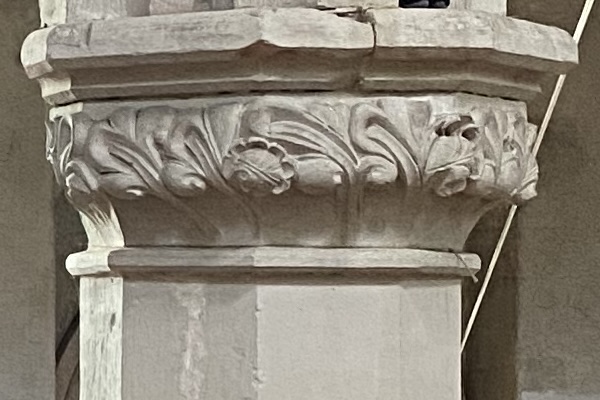
Illustrated is one of the high-quality early 13th century “stiff-leaf” capitals on the arcade piers B.
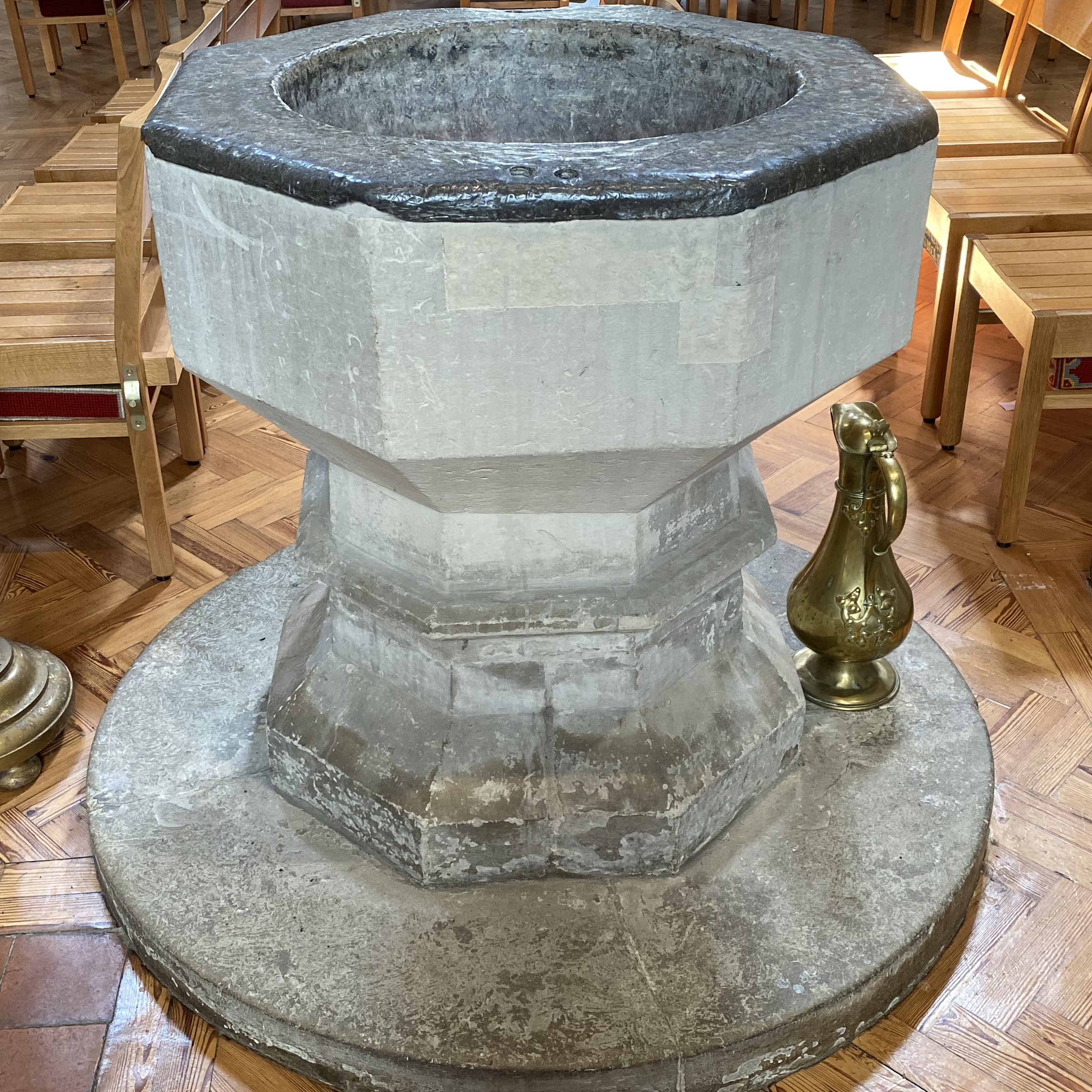
Also illustrated is the octagonal font, probably 17th century, restored in 1852 C
See also the “Saxon Grotesque” (which is actually Romanesque and mounted upside down) 16.
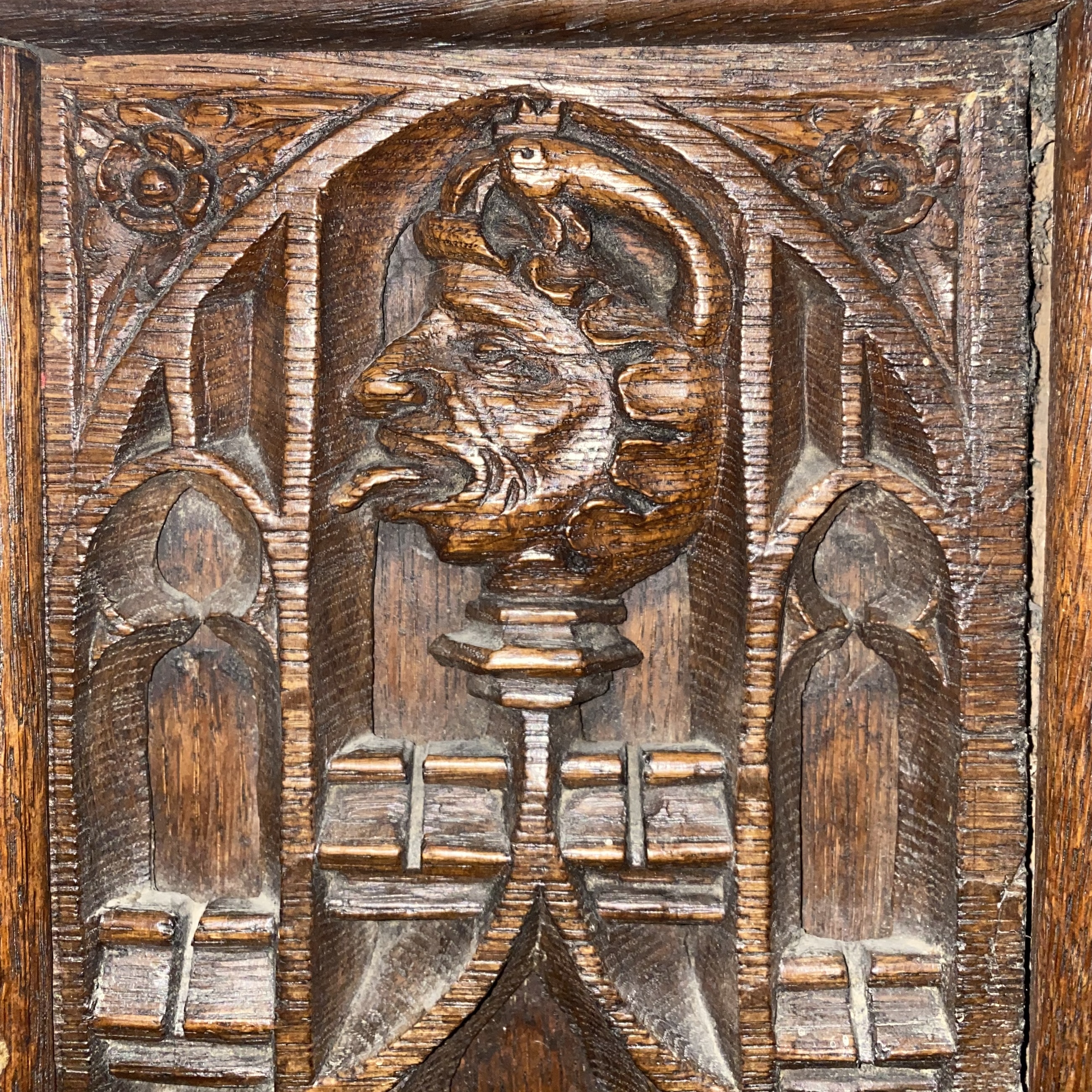
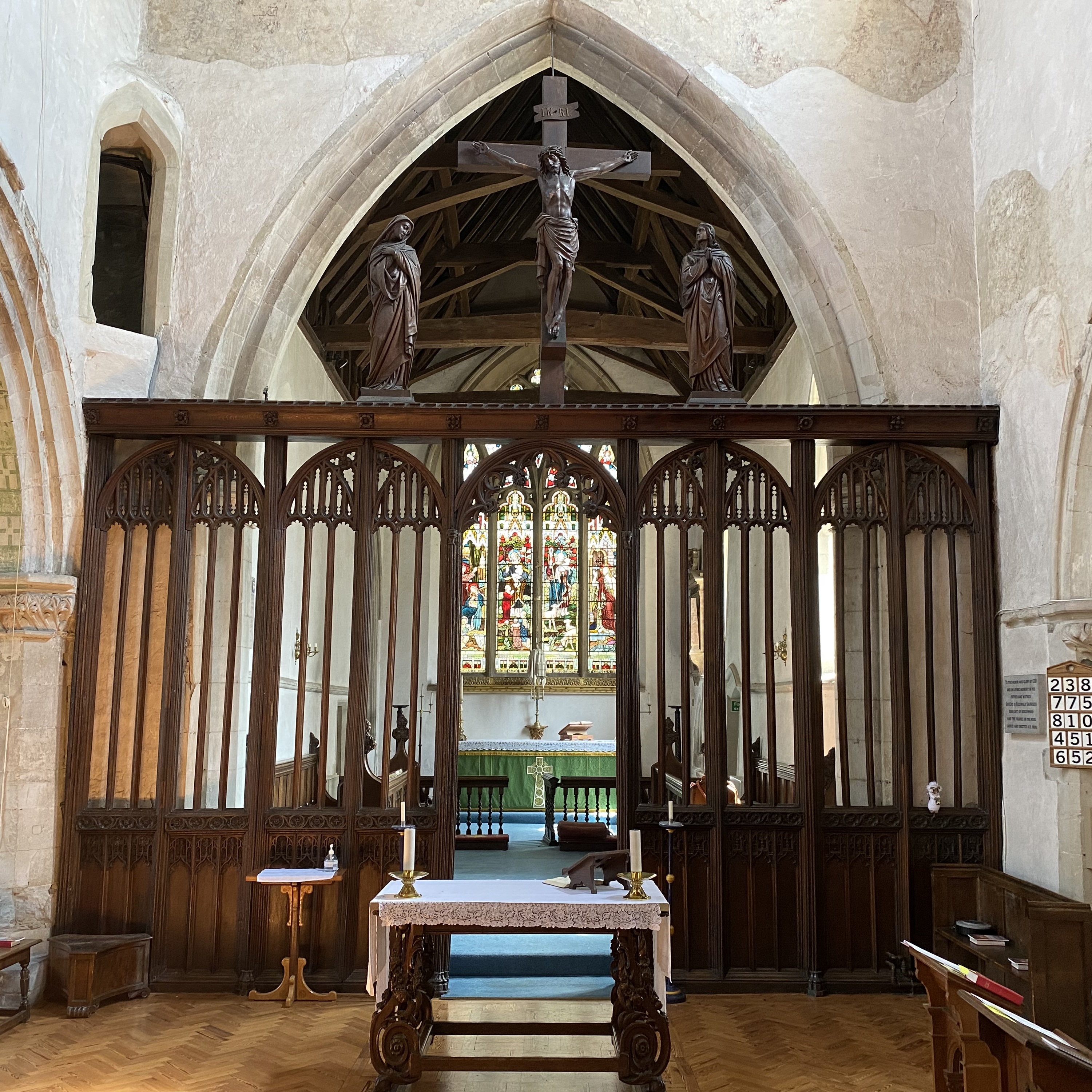
Illustrated is the 15th century rood screen with carved figures above from Oberammergau donated in 1909. 6. Also illustrated is a detail from the screen: a joke maybe.
See also the 16th century carved wooden figure of the Virgin Mary 5.
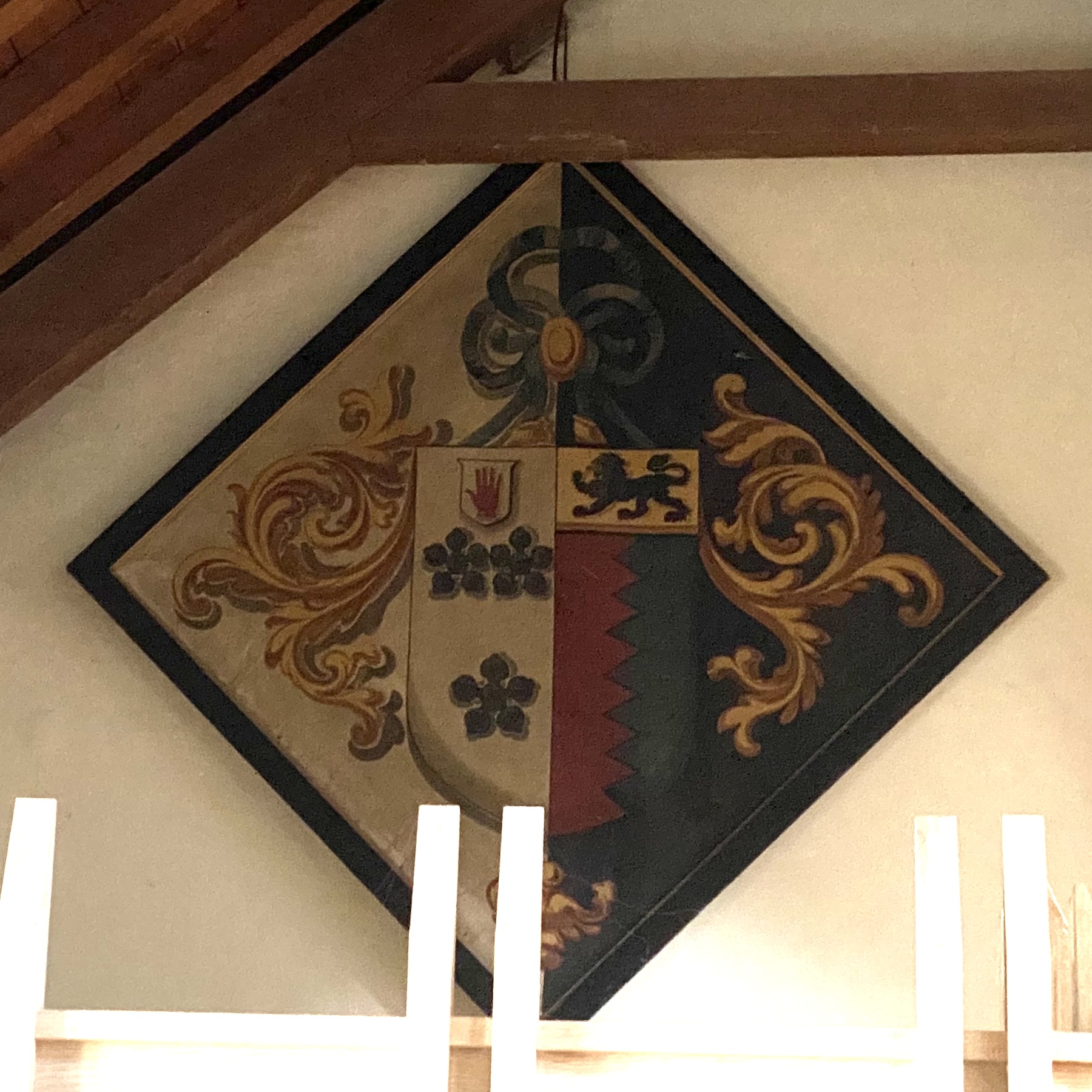
The most distinctive paintings (other than the murals) are the seven 18th and 19th century funerary hatchments (heraldic achievements).
Illustrated is the one for Olivia, Lady Saunders Sebright, died 1859, 2nd wife of Sir Thomas, 8th Bart [D]. It is now located on a wall above the kitchen.
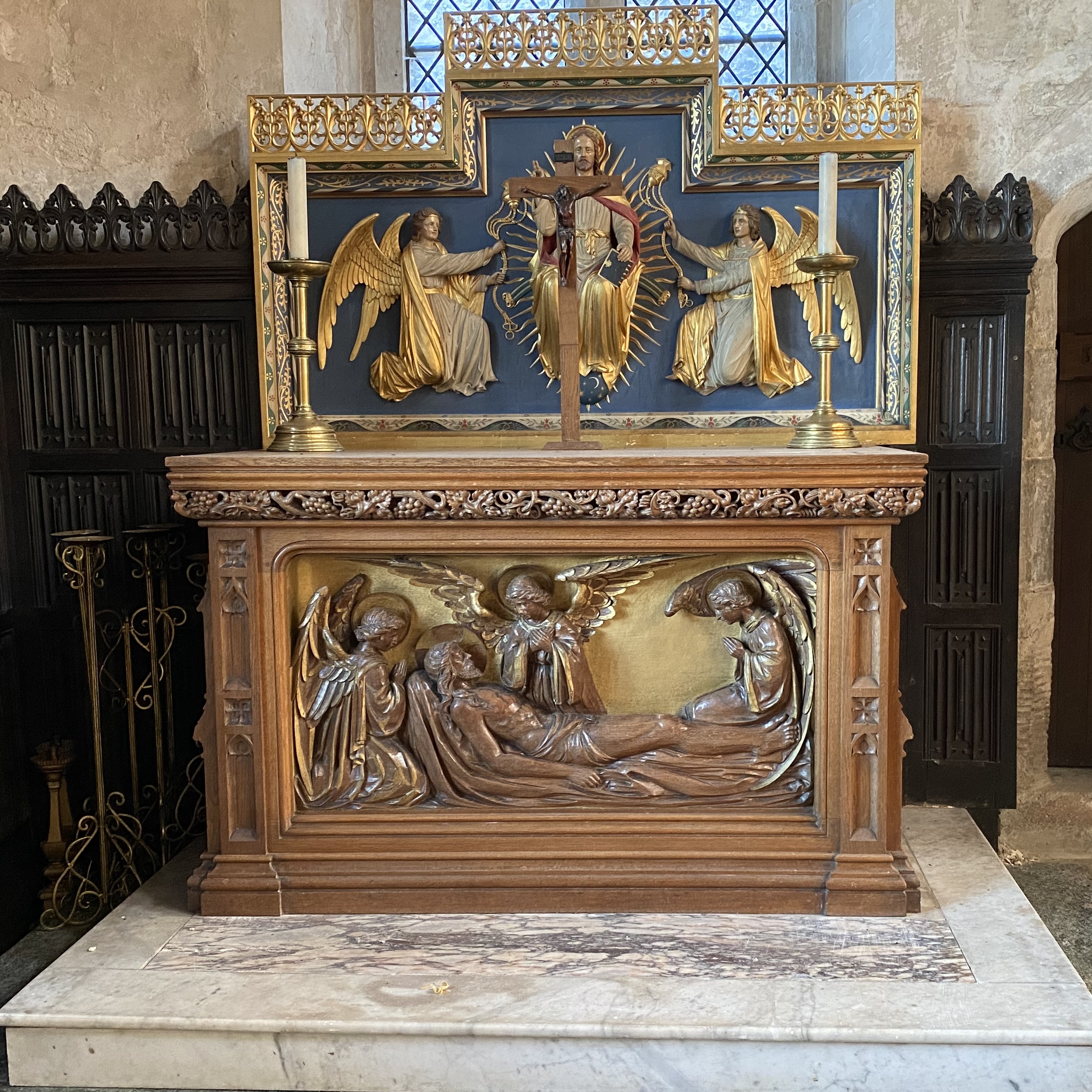
Illustrated is the altar in the north aisle created controversially by Sir Guy Saunders Sebright as a memorial to his son killed in WW1 3.
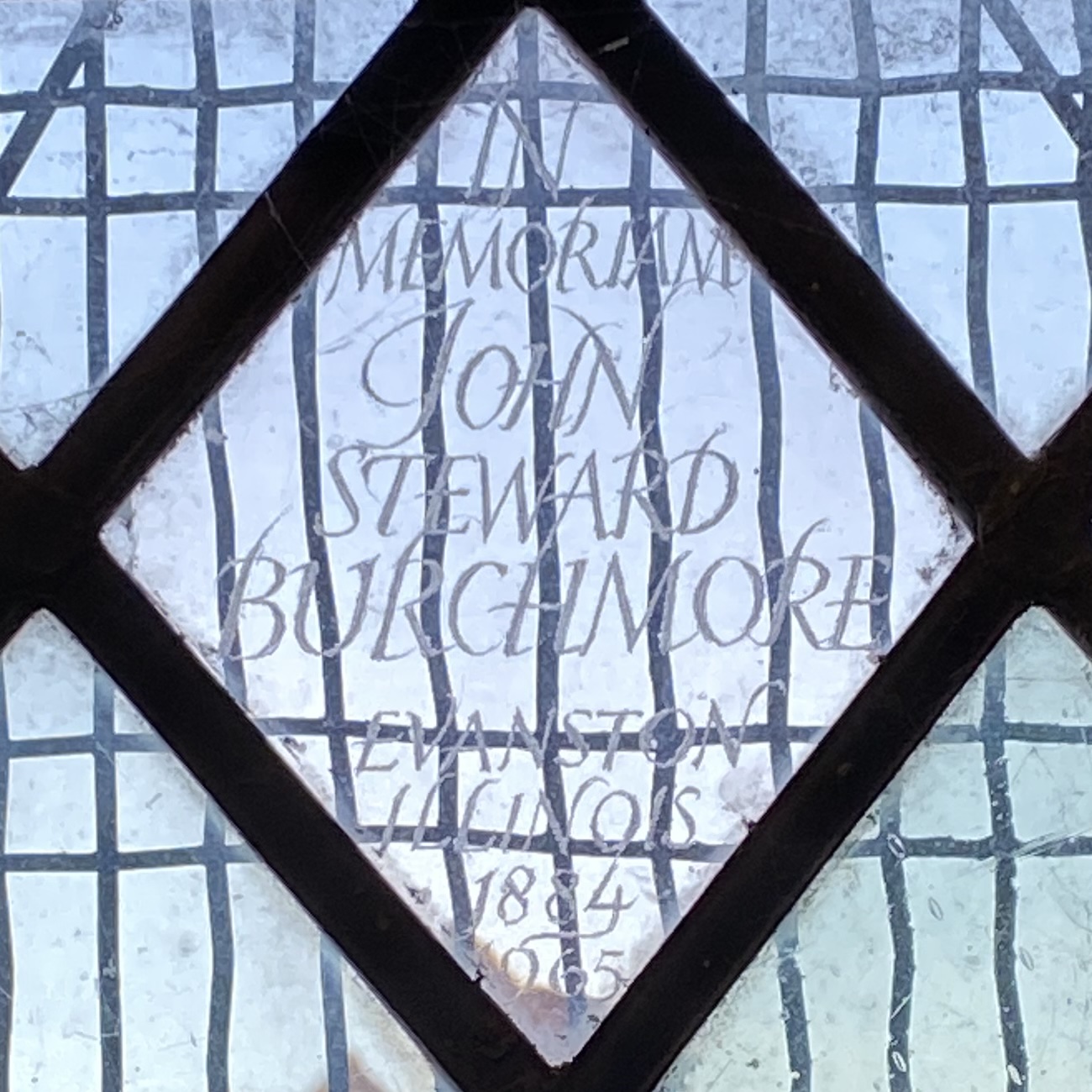
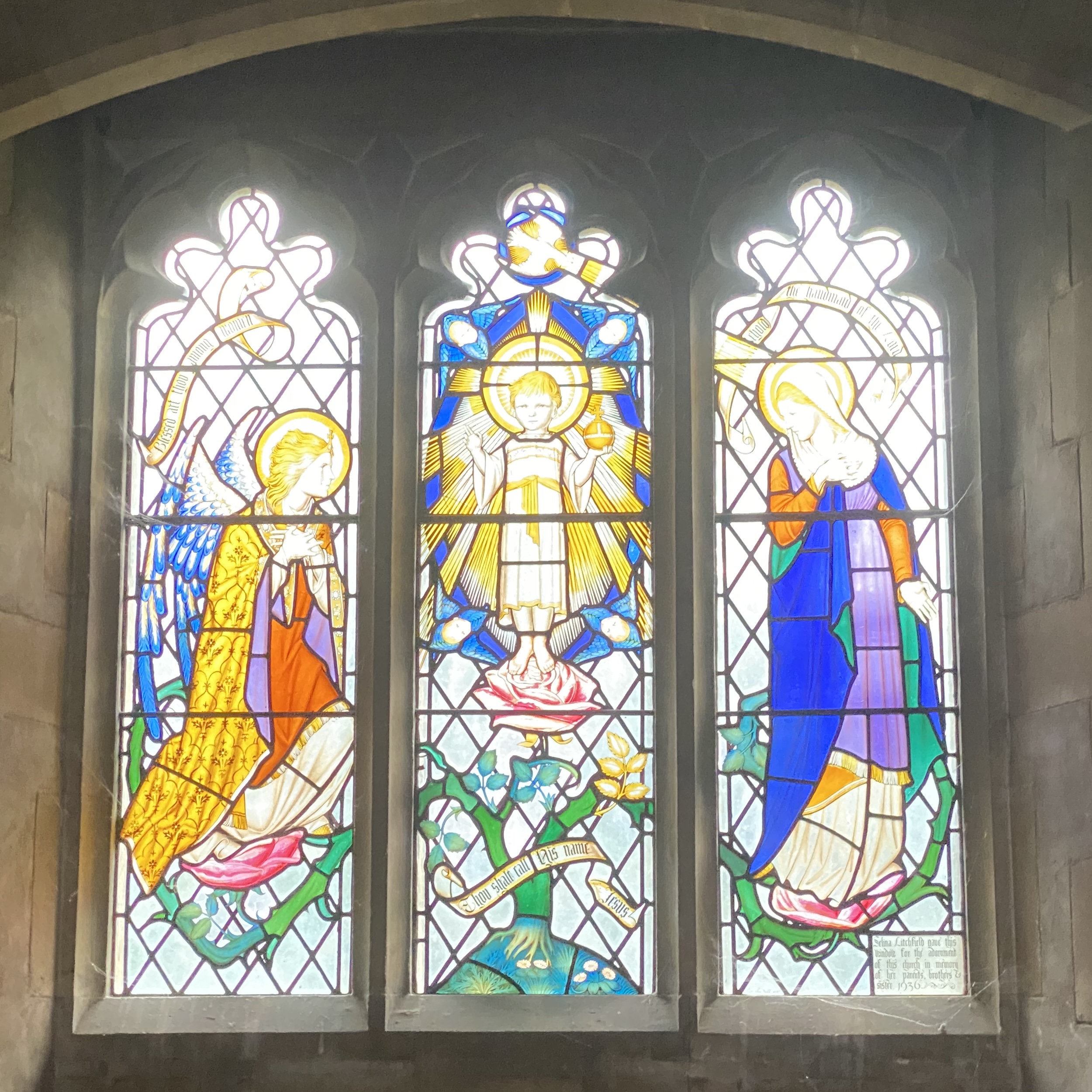
Most of the stained glass is 19th or 20th century.
Illustrated is a 1936 3-light window in the south aisle by Christopher Webb E and a window in the north aisle that contains fragments of mediaeval stained glass and a modern memorial inscription 20.
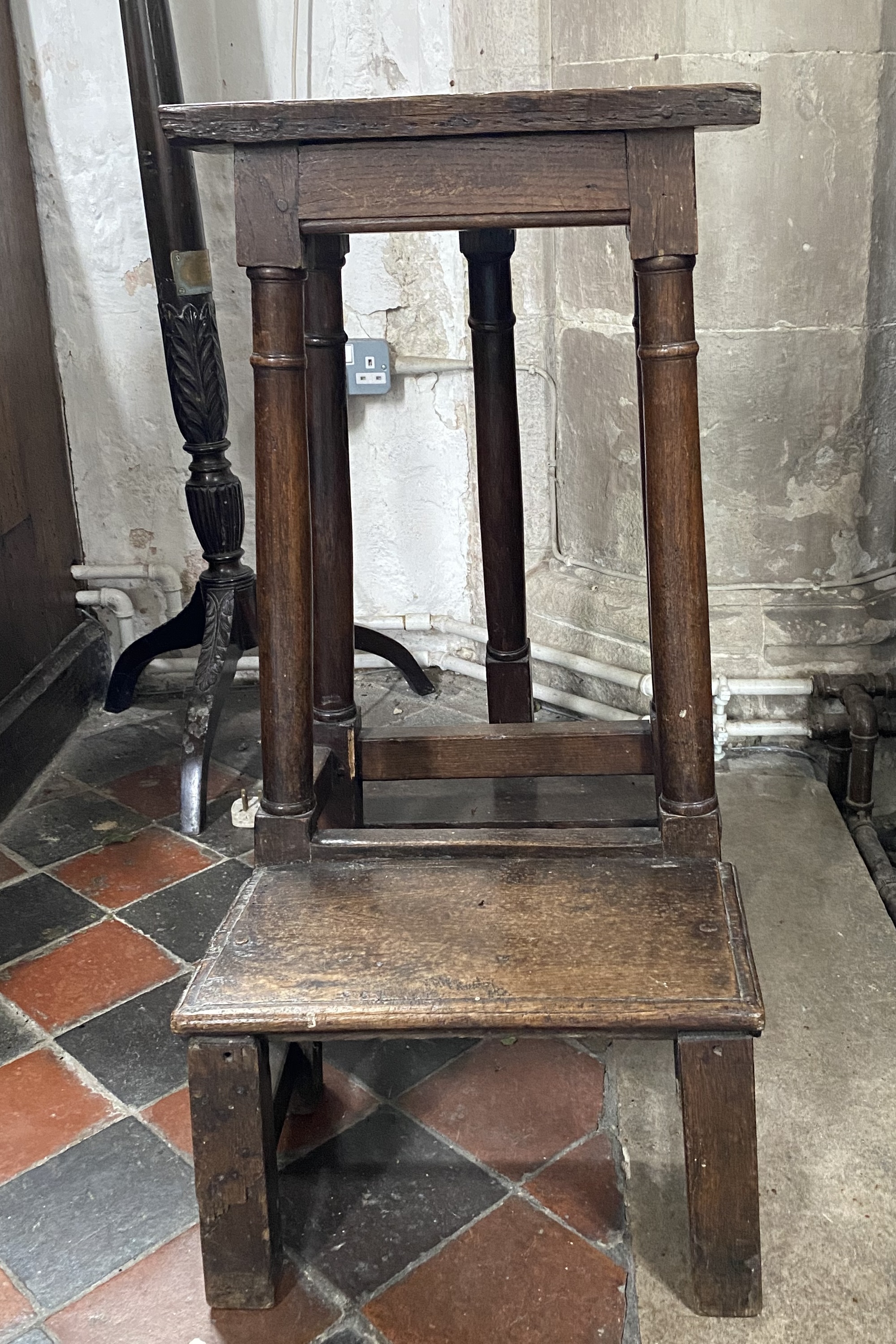
Illustrated is a 17th century cope stool, one of two used by clergy during long services 7.
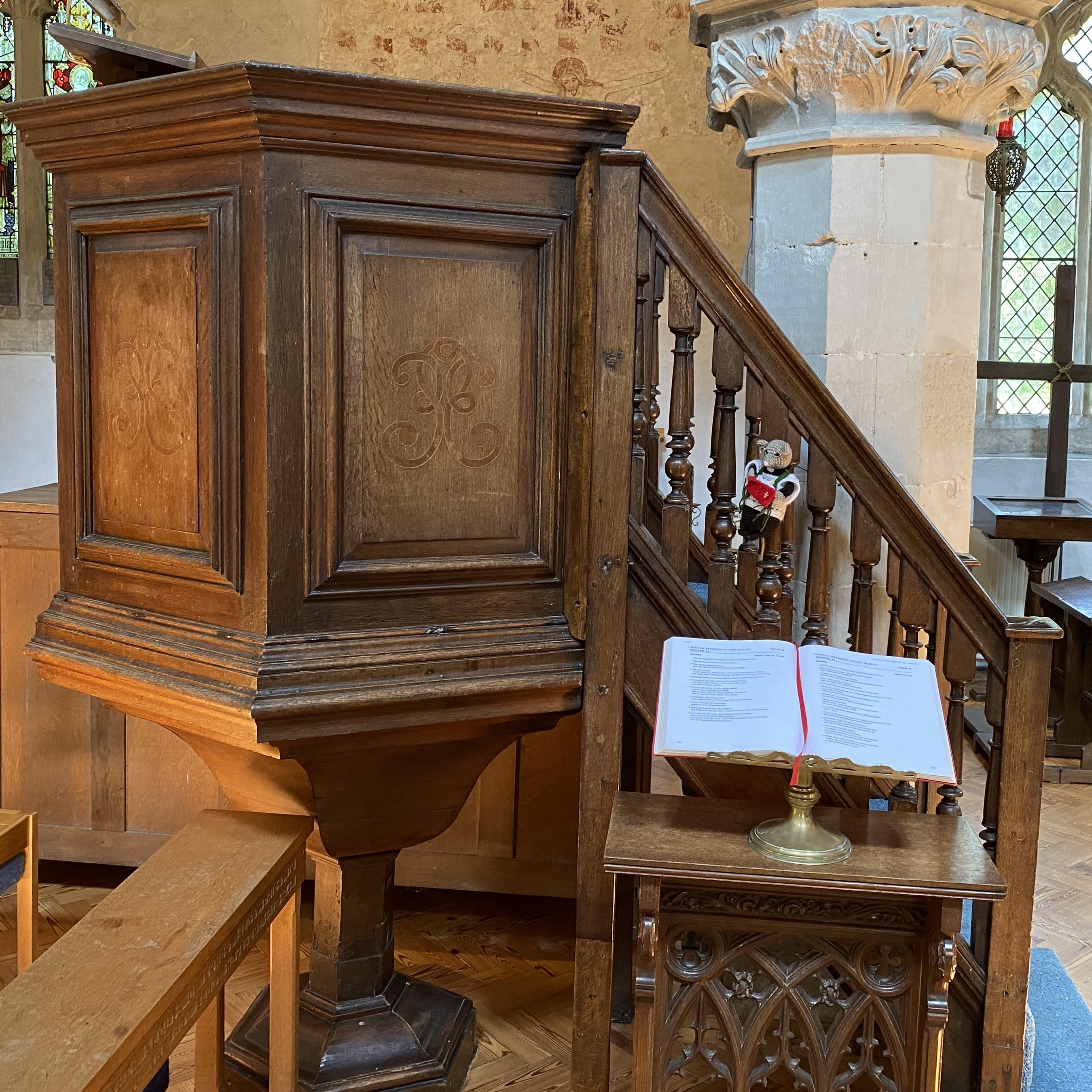
See also the pulpit, also made of oak F. This was donated by Edward Sebright and Anne Saunders on their wedding in 1688.
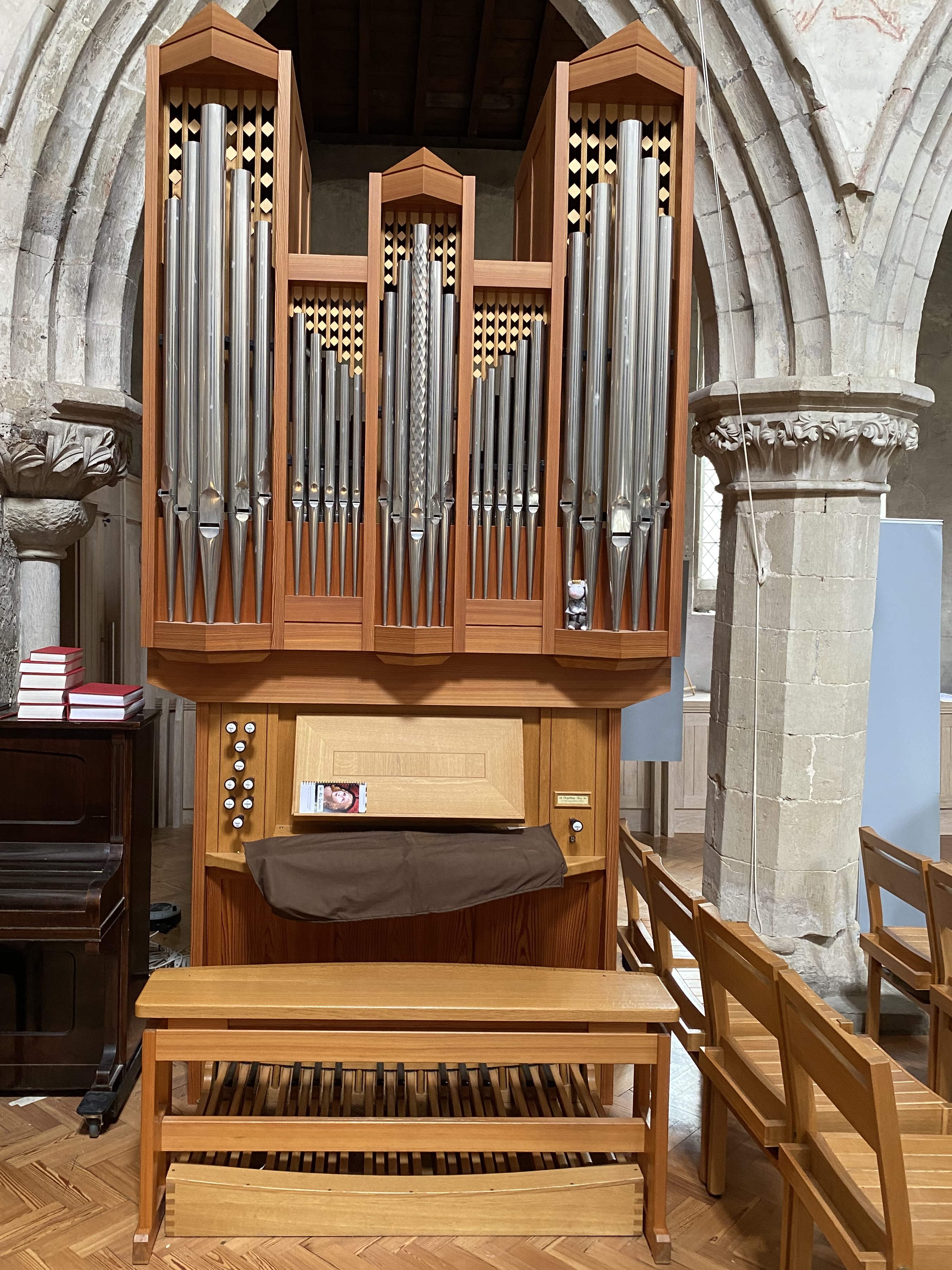
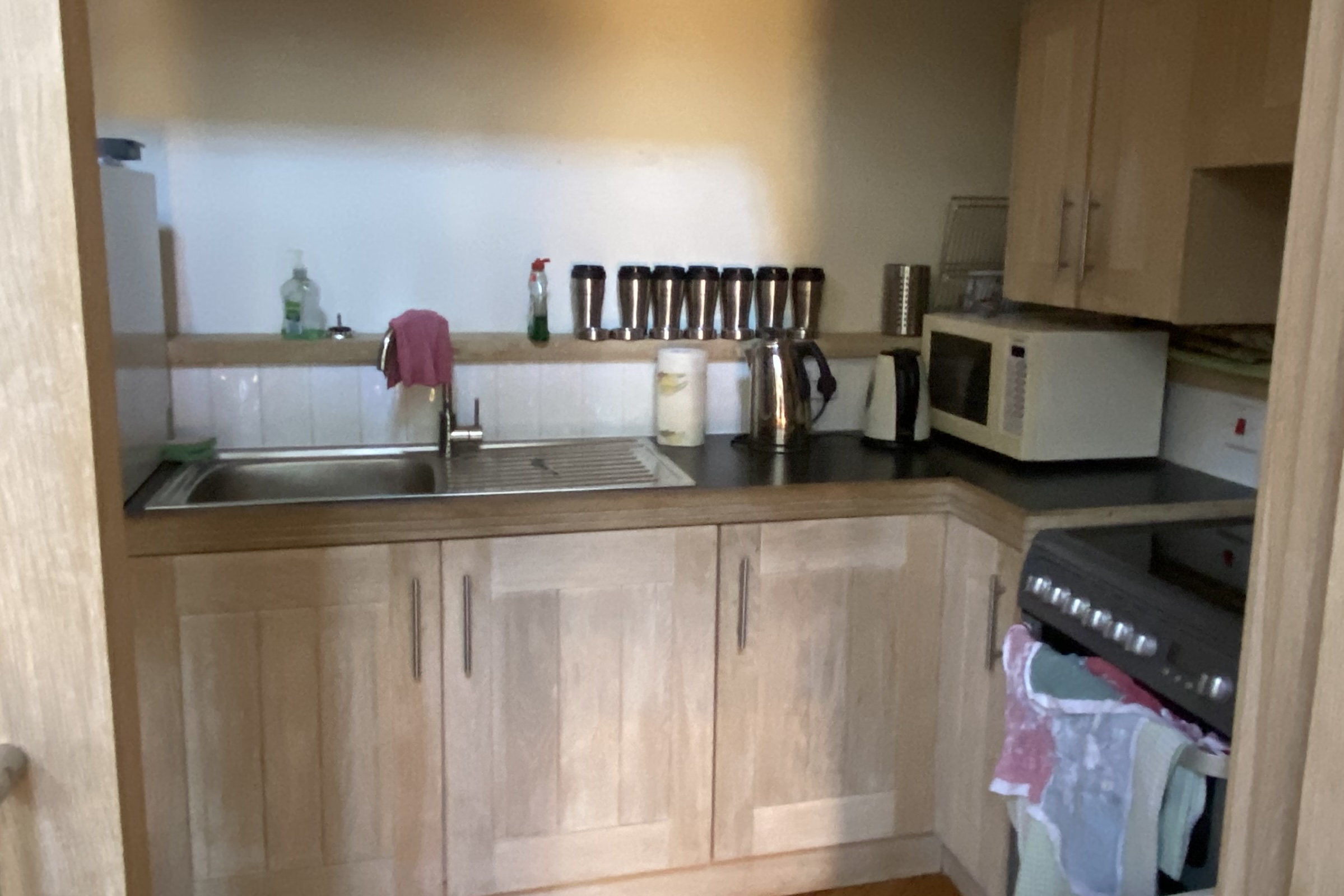
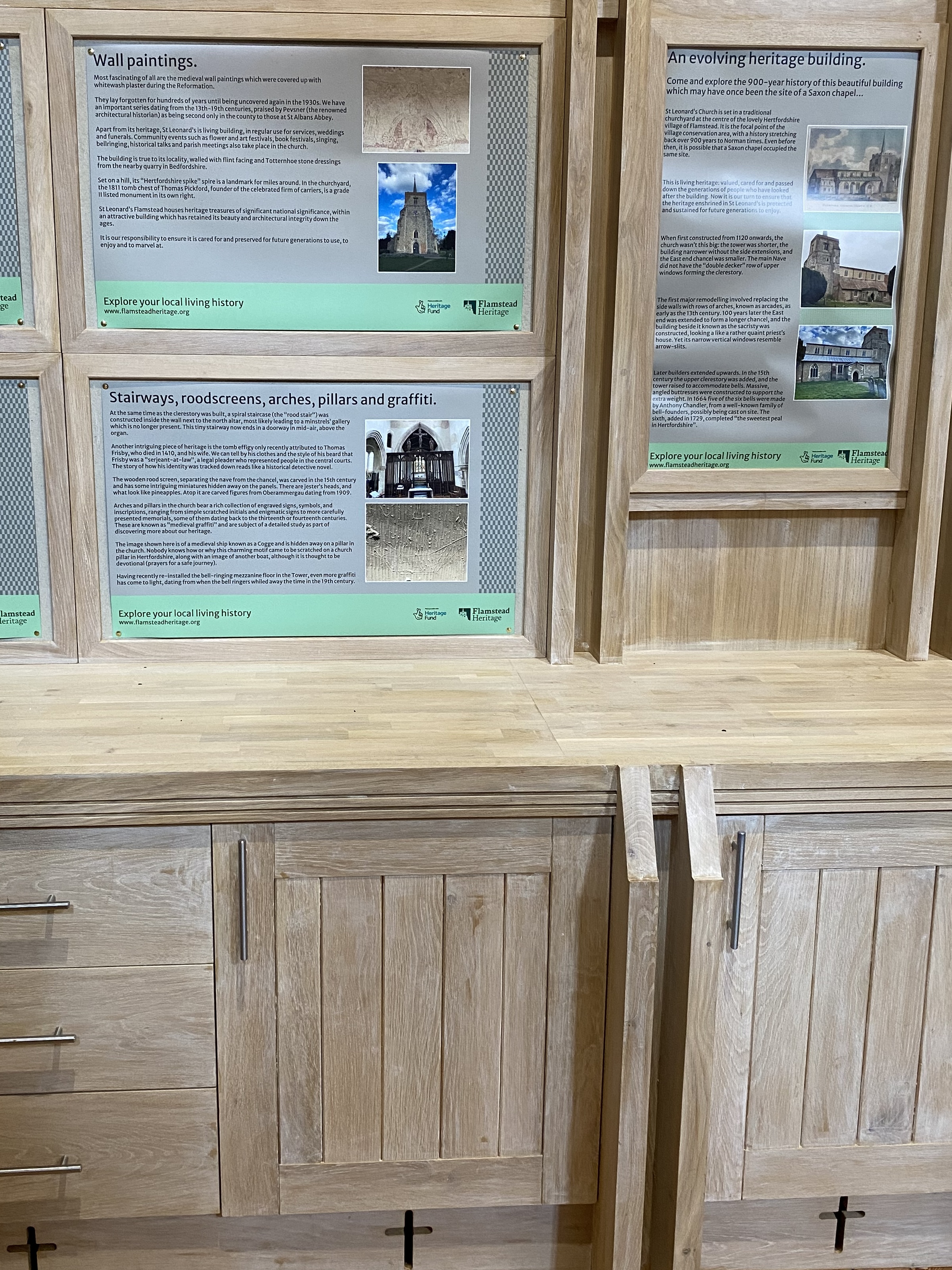
St Leonard has benefitted from about 2015 onwards with modern infrastructure to equip it for the 21st century.
Illustrated are pipe organ 19, kitchen (with running water) G and the exhibition area H.
Click on the accompanying images for a more detailed look.
The interactive floor plan is for the church interior. The associated building history timeline is about the church fabric and how it evolved over many centuries.
Further sources of information are outlined in the “Find out More” section.
There are several series of wall paintings, dating from the late 13th century, acknowledged as “the most important in a parish church in Hertfordshire”. They were covered in whitewash during the Reformation and uncovered between 1930 and 1990.
Illustrated are a 14th century “Passion Cycle” 2 and a 14th century “Christ in Majesty” combined with a 15th century “Doom” 10.
See also “Three Living and Three Dead” 14.
The mediaeval graffiti in St Leonard’s has been rated by expert Matt Champion as “one of the top ten churches in the country”. There is a wide range of different types.
Illustrated is an Elizabethan memorial inscription 12 and a “cog” A, a 14th century ship.
There are many interesting memorials inside the church.
Illustrated are the early 15th century “Frisby Monument” 1 and the 1693 “Saunders Children’s Memorial” 11.
See also the “Sebright Memorial” [8] and “Memorial to Sir Bartholomew Fowke” 9.
Illustrated is one of the high-quality early 13th century “stiff-leaf” capitals on the arcade piers B.
Also illustrated is the octagonal font, probably 17th century, restored in 1852 C
See also the “Saxon Grotesque” (which is actually Romanesque and mounted upside down) 16.
Illustrated is the 15th century rood screen with carved figures above from Oberammergau donated in 1909. 6. Also illustrated is a detail from the screen: a joke maybe.
See also the 16th century carved wooden figure of the Virgin Mary 5.
The most distinctive paintings (other than the murals) are the seven 18th and 19th century funerary hatchments (heraldic achievements).
Illustrated is the one for Olivia, Lady Saunders Sebright, died 1859, 2nd wife of Sir Thomas, 8th Bart [D]. It is now located on a wall above the kitchen.
Illustrated is the altar in the north aisle created controversially by Sir Guy Saunders Sebright as a memorial to his son killed in WW1 3.
Most of the stained glass is 19th or 20th century.
Illustrated is a 1936 3-light window in the south aisle by Christopher Webb E and a window in the north aisle that contains fragments of mediaeval stained glass and a modern memorial inscription 20.
Illustrated is a 17th century cope stool, one of two used by clergy during long services 7.
See also the pulpit, also made of oak F. This was donated by Edward Sebright and Anne Saunders on their wedding in 1688.
St Leonard has benefitted from about 2015 onwards with modern infrastructure to equip it for the 21st century.
Illustrated are pipe organ 19, kitchen (with running water) G and the exhibition area H.